"Japan is giving away free houses." You've seen the headlines. They're not entirely wrong — some municipalities do list properties for next to nothing. But as the Japan Times put it: "First lesson of Japan's akiya gold rush: no such thing as a free house."
Akiya (空き家) are Japan's vacant and abandoned homes. As of 2023, there are 9 million of them — a record 13.8% of all residential properties in the country. Of those, 3.9 million are truly abandoned: not listed for rent, not for sale, not used as vacation homes. Just sitting empty, deteriorating.
For foreign buyers, akiya represent a genuine opportunity. You can own a house with land in Japan for the price of a used car. But the gap between "buy cheap" and "live well" is filled with renovation costs, legal complications, and ongoing expenses that the viral articles never mention. Here's what akiya actually cost.
What You're Actually Buying
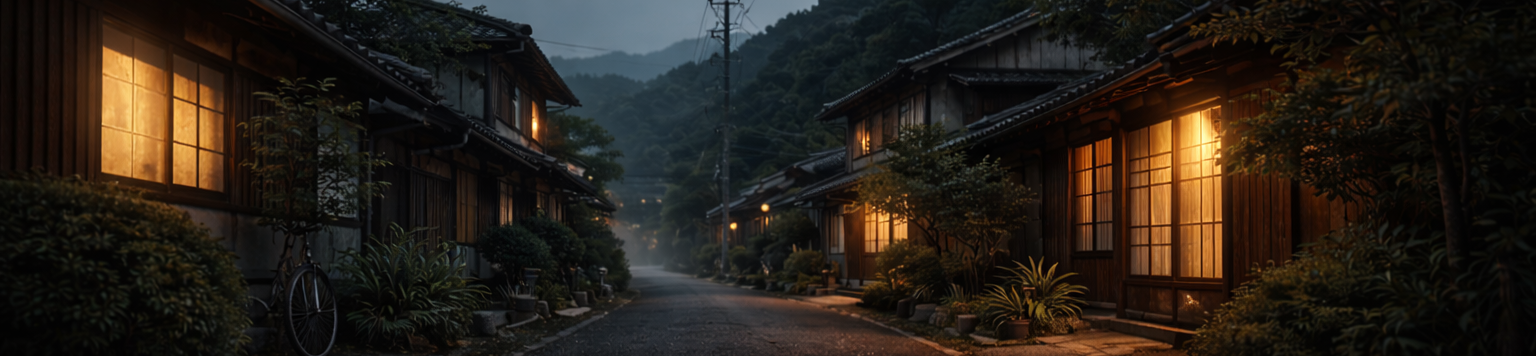
Most akiya on the market are wooden houses built in the 1960s-1980s, in rural or semi-rural areas. They've been sitting empty for years — sometimes decades — after the owner moved to a nursing home or passed away. The children inherited the house but live in Tokyo or Osaka and have no interest in maintaining it.
The purchase prices look unbelievable:
- Free to ¥100,000 (~$0-700) — Deeply rural, heavily deteriorated. Often come with residency requirements.
- ¥100,000 - ¥500,000 (~$700-3,500) — The "viral headline" price range. Structurally questionable, definitely needs work.
- ¥500,000 - ¥2,000,000 (~$3,500-14,000) — The sweet spot most foreign buyers target. Intact structure but needs significant renovation.
- ¥2,000,000 - ¥5,000,000 (~$14,000-35,000) — Better condition, sometimes partially renovated, or in more accessible locations.
- ¥5,000,000+ — Higher-end akiya in scenic areas, or traditional kominka with heritage value.
The purchase price is real. But it's also the smallest part of the total cost.
Renovation: Where the Real Money Goes
A typical akiya needs everything: roof, plumbing, electrical, insulation, kitchen, bathroom, pest treatment, and often structural reinforcement. The general rule of thumb is ¥50,000-100,000 per square meter for proper renovation. A 100-120 sqm house will need ¥5-12 million to make livable by modern standards.
Here's what each system typically costs:
| Work | Cost Range |
|---|---|
| Roof repair/replacement | ¥500,000 - ¥3,500,000 |
| Exterior walls and siding | ¥500,000 - ¥3,500,000 |
| Septic system (jokaso) installation | ¥1,500,000 - ¥2,500,000 |
| Kitchen renovation | ¥400,000 - ¥2,000,000 |
| Bathroom (ofuro) renovation | ¥450,000 - ¥1,400,000 |
| Insulation retrofit | ¥500,000 - ¥1,500,000 |
| Electrical rewiring + panel upgrade | ¥300,000 - ¥600,000 |
| Plumbing overhaul | ¥100,000 - ¥500,000 per room |
| Seismic retrofitting (pre-1981 buildings) | ¥250,000 - ¥1,500,000 |
| Debris/belongings removal | ¥100,000 - ¥800,000 |
| Termite inspection + treatment | ¥60,000 - ¥230,000 |
| Toilet (Japanese to Western) | ¥200,000 - ¥500,000 |
| Flooring | ¥50,000 - ¥200,000 per room |
| Exterior steps, fencing, access | ¥200,000 - ¥1,000,000 |
The debris problem: Most akiya are still full of the previous owner's belongings — furniture, clothes, appliances, personal items. All of it becomes your problem. Professional cleanout runs ¥100,000-800,000 depending on volume. This is the cost people forget to budget for first.
The Septic System Surprise
Many rural akiya don't have municipal sewer connections. They use septic systems called jokaso (浄化槽), and older ones often don't meet current standards. Installing a modern combined jokaso for a 5-7 person household costs ¥1.5-2.5 million including permits and excavation. Many municipalities require septic upgrades before approving renovation permits. Some towns offer subsidies that reduce this cost significantly — always check.
The Termite Risk
Japanese wooden houses are built from timber, and termites (shiroari) are active across most of Japan. A house sitting empty with no pest control for years is an open invitation. Termite inspection costs ¥10,000-30,000 — always do this before committing. Treatment runs ¥50,000-200,000. But if structural beams are compromised, replacement costs ¥150,000+ per major beam, and the total can escalate with no upper bound.
Title Issues: The Legal Minefield
This is the complication that catches the most buyers off guard. Many akiya have unclear ownership due to inheritance chains.
When the original owner dies without a clear will, the property passes to all descendants. It's common for rural properties to remain registered under a deceased person's name for decades. One Canadian buyer purchased a ¥500,000 akiya but spent a full year and significant legal fees clearing the title — hiring a judicial scrivener to trace inheritance lineages, locate estranged heirs, and resolve decades-old mortgage registrations. The acquisition cost ended up at ¥1.3 million before any renovation.
Other title issues to watch for:
- Unregistered buildings — The building exists physically but has no official registration. Common in rural areas.
- Agricultural land restrictions — Properties on or near agricultural land (nochi) require approval from the Agricultural Committee before purchase. As of April 2025, Japan introduced stricter rules on foreigners acquiring farmland.
- Old mortgage registrations — Sometimes the loan was paid off decades ago but the registration was never cleared. Needs formal resolution before transfer.
- Residency requirements — Some akiya bank listings require you to live there permanently. Check for conflicts with your visa status.
Always hire a judicial scrivener (shiho shoshi) to verify title before committing to any akiya purchase. Budget ¥80,000-150,000 for their fees.
The Real Math: Cheap Akiya vs. Move-In-Ready
Scenario A: ¥500,000 akiya + full renovation
| Item | Cost |
|---|---|
| Purchase price | ¥500,000 |
| Closing costs + legal fees | ¥225,000 |
| Debris removal | ¥300,000 |
| Termite inspection + treatment | ¥230,000 |
| Roof repair | ¥2,000,000 |
| Septic system | ¥2,000,000 |
| Electrical + plumbing | ¥1,250,000 |
| Kitchen + bathroom | ¥2,200,000 |
| Insulation + seismic | ¥1,450,000 |
| Flooring, walls, cosmetic | ¥500,000 |
| Exterior work | ¥500,000 |
| Contingency (surprises) | ¥1,000,000 |
| Total | ~¥12,155,000 (~$80,000) |
Scenario B: ¥5,000,000 move-in-ready house
| Item | Cost |
|---|---|
| Purchase price | ¥5,000,000 |
| Closing costs + agent fee | ¥606,000 |
| Minor cosmetic updates | ¥300,000 |
| Total | ~¥5,906,000 (~$39,000) |
The "cheap akiya + renovation" path costs roughly double the move-in-ready option. It also takes 6-18 months longer and involves far more risk of cost overruns.
When the cheap akiya makes sense: You want a specific rural location where move-in-ready homes don't exist. You want a traditional kominka and are willing to invest in it. You plan to DIY significant work. The municipality offers generous renovation subsidies (¥500K-3M possible). You value the lifestyle over the economics. When it doesn't: You want to move in quickly, you want predictable costs, or you don't have local contractor relationships.
Ongoing Costs of Ownership
Even after purchase and renovation, owning a rural property has recurring annual costs:
- Fixed asset tax — 1.4% of assessed value. For a rural akiya, typically ¥30,000-100,000/year.
- Fire insurance — ¥10,000-50,000/year. Required by most lenders and strongly recommended.
- Earthquake insurance — ¥7,000-28,000/year (optional but recommended; varies by prefecture).
- Maintenance — Budget 1-3% of property value annually. Older homes need more.
- Pest control — ¥30,000-50,000/year for preventive termite treatment.
- Snow removal (northern areas) — ¥2,000-5,000 per session; ¥50,000-150,000+ per winter.
- Community fees (chonaikai) — ¥10,000-50,000/year. Expected participation in the neighborhood association.
Minimum annual cost of owning even a "free" akiya: ¥200,000-300,000 ($1,400-2,000). A realistic annual figure with insurance and proper maintenance: ¥300,000-800,000 ($2,000-5,500).
How to Find and Assess Akiya
Akiya are listed on municipal databases called akiya banks (空き家バンク). There's no single national database — each city or town runs its own. Most are Japanese-only, but English-friendly aggregators exist:
- Akiya Banks — bilingual directory of every municipal akiya bank in Japan
- Old Houses Japan — curated English listings with editorial context
- AkiyaHub — English-language listings and buying guides
- Akiya-Mart — searchable English database
- Maneki Homes — English listings including some akiya and rural properties
Before committing to any property, get:
- A termite inspection (¥10,000-30,000)
- A title verification from a judicial scrivener (¥80,000-150,000)
- Renovation estimates from at least two local contractors
- Confirmation of zoning and land-use classification
- Check for municipal renovation subsidies — grants can cover 10-80% of eligible costs
Renovation Subsidies Worth Knowing About
Many municipalities offer substantial grants to offset akiya renovation costs:
- Hokkaido — up to ¥3,000,000 for rural revitalization renovations
- Fukuoka — up to ¥2,500,000 for regional settlement support
- Nagano — up to ¥2,000,000 for purchase + renovation
- Kochi — up to ¥2,000,000 for eco-friendly renovations
- Shimane — up to ¥1,800,000 for traditional home preservation
- Earthquake retrofitting (nationwide) — ¥1,000,000-3,000,000, typically 50% of costs
Key rules: you must apply before starting renovation. Retroactive claims are typically rejected. Residency requirements are common. Budgets are limited and may close early. Always confirm with the specific municipality.
The Bottom Line
Akiya are a real opportunity, but not a financial shortcut. The purchase price is the headline, but renovation is the story. A realistic all-in budget for a livable akiya is ¥5-12 million ($35,000-80,000), and the process takes 6-18 months from search to move-in.
The people who succeed with akiya are the ones who go in with realistic expectations: they hire professionals (judicial scrivener, bilingual agent, licensed contractors), they budget for surprises, and they value the lifestyle return over the financial one. If you're looking for equity growth, Japan isn't the market. If you're looking for a house with land, surrounded by nature, in one of the safest countries on earth — akiya can get you there for a fraction of what it costs anywhere else in the developed world.
Looking for property in Japan?
Settle Japan helps with property search, akiya assessment, renovation planning, and the buying process — including remote purchases. Start with a free eligibility check.