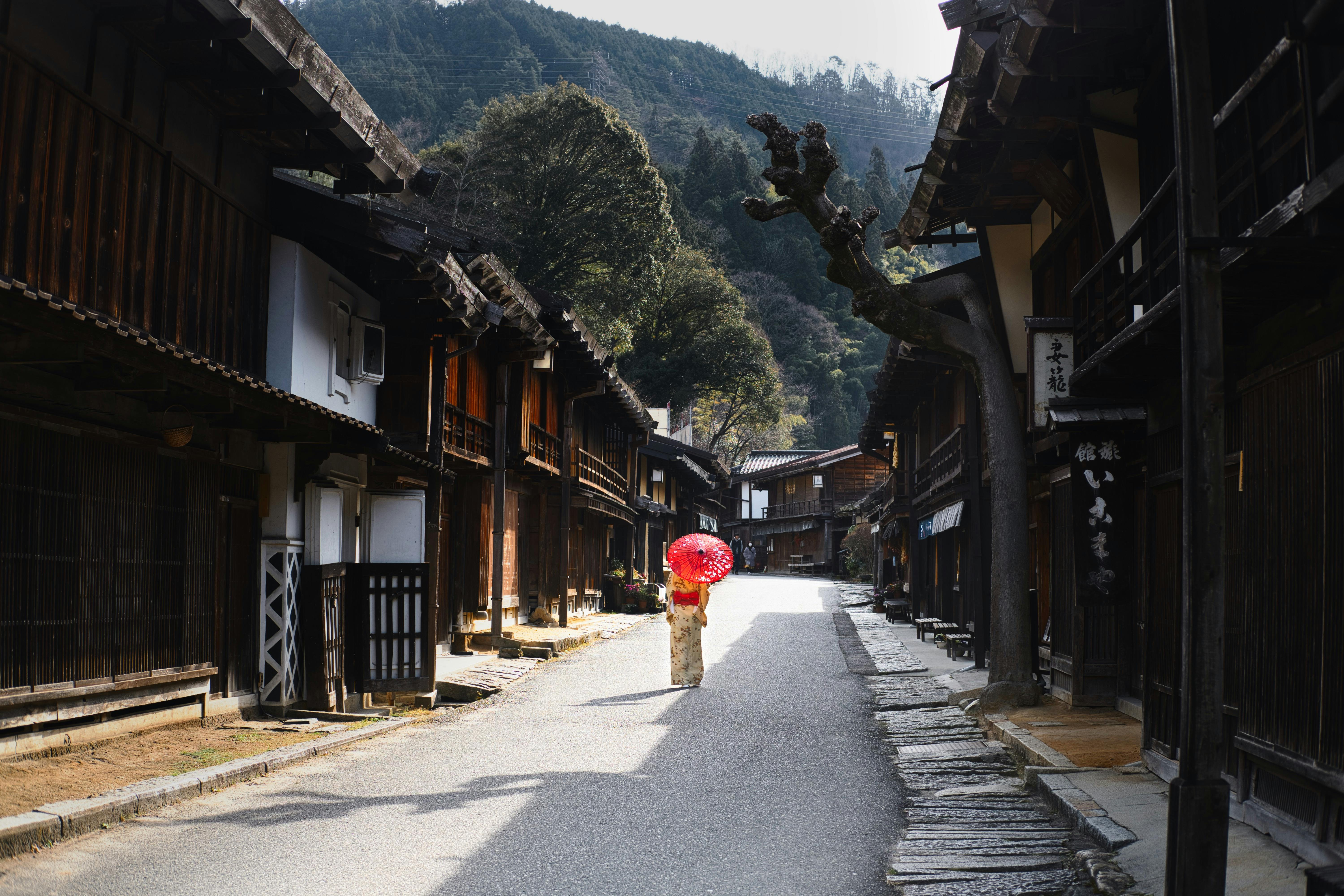
Here's the thing most people don't realize about buying property in Japan: there are zero restrictions on foreign buyers. None. You don't need to be a resident. You don't need a visa. You don't need a special permit or government approval. You can be sitting in Toronto or London or Sydney, and you can buy a house in Japan with the same legal standing as a Japanese citizen.
You get full freehold ownership of both the building and the land underneath it. That's not common globally. Plenty of countries restrict foreign buyers to leasehold, or cap ownership at condos, or require residency first. Japan doesn't do any of that.
That said, "easy to buy" and "easy to get right" are two different things. The process has quirks, the costs add up in ways you might not expect, and there are pitfalls that catch foreign buyers every year. This is what the process actually looks like.
What You Actually Own
When you buy property in Japan, you typically get freehold title to both the building and the land. This is called shoyuken - full ownership rights. You can sell it, renovate it, rent it out, pass it to your heirs, or let it sit empty. It's yours.
This applies equally to foreigners. There's no separate ownership category, no restricted title, no time limits. Your name goes on the land registry (touki bo) just like anyone else's.
There are some rare exceptions. Occasionally you'll see properties on leasehold land (shakuchiken), where you own the building but lease the ground underneath it. These are uncommon in the rural and small-city markets where most foreign buyers are looking, but worth checking. Your agent or scrivener will confirm the title type before you commit to anything.
The Real Costs
The listing price is just the starting point. Japan's property transaction costs are well-defined but often surprise first-time buyers. Here's what you're actually paying:
- Agent commission - 3% of the sale price + 60,000 yen + consumption tax. This is the legal maximum and it applies to both the buyer's and seller's side. On a 5 million yen property, that's roughly 216,000 yen.
- Registration and acquisition tax - roughly 1-2% of the assessed value. This covers the real estate acquisition tax (fudosan shutoku zei) and the registration license tax (toroku menkyozei) for transferring the title.
- Judicial scrivener fees - the shiho shoshi handles the legal paperwork and title transfer. Fees typically run 100,000-200,000 yen depending on complexity.
- Fire insurance - required. Annual premiums vary by location and building type, but budget 20,000-50,000 yen per year.
- Stamp duty - a small tax on the contract documents. Usually 5,000-10,000 yen on typical residential purchases.
- Fixed asset tax - this one's ongoing. Paid annually based on the assessed value of the property and land. For a rural property, this might be 30,000-80,000 yen per year. For urban areas, significantly more.
The total: plan for 7-10% on top of the listing price in transaction costs. On a 5 million yen property (roughly $35,000 USD), that means an extra 350,000-500,000 yen in fees and taxes. Not a dealbreaker, but you need to budget for it.
Can You Get Financing?
The honest answer: it depends entirely on whether you live in Japan.
If you're a resident with income in Japan - meaning you have a visa, a job or business, and a Japanese bank account - some banks will lend to you. The major lenders (SMBC, MUFG, Mizuho) and several regional banks have programs for foreign residents. Interest rates are remarkably low by global standards, often under 1% for variable-rate mortgages.
But if you're buying from overseas with no Japanese residency? Almost certainly cash only. Japanese banks don't finance non-residents. Full stop. There's no equivalent of the international buyer mortgage programs you might find in the US or UK.
So how do overseas buyers fund their purchases? Most commonly:
- Cash savings - especially for lower-priced rural properties and akiya
- Home equity - borrowing against property in your home country and paying cash in Japan
- Seller financing - rare, but it happens occasionally on hard-to-sell properties where the seller is motivated
The upside: Japan's property prices, especially outside major cities, are low enough that cash purchases are realistic. You can find habitable houses for under $50,000 USD. That changes the math completely compared to most Western markets.
The Akiya Opportunity
Japan has over 9 million vacant homes - called akiya. Some local governments are practically giving them away, listing properties for as little as a few hundred dollars. You've probably seen the headlines.
The opportunity is real. But "cheap" doesn't automatically mean "good deal."
Here's what the headlines don't tell you:
- Renovation costs can dwarf the purchase price. A house listed at 500,000 yen might need 5-10 million yen in work to make it livable by modern standards. Roofs, plumbing, electrical, insulation, pest damage - it adds up fast.
- Some titles are a mess. Properties inherited through multiple generations sometimes have unclear ownership. If the title isn't clean, the purchase can stall or fall apart entirely.
- Structural issues are common. Many vacant homes have been sitting empty for years or decades. Water damage, termite damage, foundation settling, and roof failure are all possibilities. Japanese wooden houses need maintenance to survive, and these haven't been getting it.
- Location matters more than price. A free house in a town with no grocery store, no hospital, and one bus per day isn't free - it's expensive in ways that don't show up on the listing. Think about what you actually need nearby.
None of this means you should avoid akiya. Some are genuine bargains - solid structures in good locations that just need cosmetic updates. But you need someone who can assess the real total cost before you commit. The purchase price is often the smallest number in the equation.
Buying Remotely
Yes, you can buy property in Japan without being physically present. Most of Settle Japan's property clients buy from abroad. It's a well-established process.
Here's how it works:
- Find a property - browse listings on Maneki Homes (English-language) or Japanese sites like Suumo, Homes.co.jp, and At Home. Your agent can also source off-market options.
- Virtual tour - your agent or a local partner visits the property and does a video walkthrough so you can see the condition, the neighborhood, and any red flags.
- Negotiate and agree terms - your agent handles the back-and-forth with the seller's side. All in Japanese, which is why having a licensed partner matters.
- Power of attorney - you sign a POA (ininjou) that authorizes your representative in Japan to sign documents on your behalf. This needs to be notarized in your home country and sometimes apostilled.
- Contract and closing - your representative signs the preliminary and final contracts, handles the deposit and balance payments, and attends the closing at the scrivener's office.
- Title transfer and key handover - the scrivener registers the title in your name. You're now a property owner in Japan.
The whole process can be done without you setting foot in the country. That said, if you have the chance to visit before buying - especially for higher-value properties - it's worth the trip.
Common Pitfalls
These are the mistakes we see foreign buyers make most often:
- Not budgeting for renovation. Especially on cheap akiya. The purchase price gets all the attention, but renovation is where the real spending happens. Always get a renovation estimate before committing.
- Assuming Western building standards. Japanese houses are built differently. Timber-frame construction, minimal insulation (especially in older homes), different earthquake-proofing standards across eras. What counts as "good condition" in Japan might not match your expectations.
- Skipping the inspection. Japan doesn't have a strong culture of pre-purchase home inspections the way the US or UK does. That doesn't mean you should skip one. An inspection (called a "home inspection" or kenchiku bukken chosa) costs 50,000-100,000 yen and can save you millions in unexpected repairs.
- Not understanding zoning. Agricultural land (nochi) has restrictions. You can't just buy a rice paddy and build a house on it without permission from the agricultural commission. If a property sits on agricultural land, make sure the zoning allows your intended use.
- Underestimating ongoing costs. Property tax, building maintenance, pest control (termites are a real issue), garden upkeep, snow removal in northern areas - owning a house in Japan has recurring costs that add up, even when the mortgage is zero.
The Process Step by Step
Here's the simplified timeline from start to finish:
- Find a property - browse Maneki Homes for English listings or work with an agent who can search Japanese databases on your behalf.
- Make an offer through an agent - your agent presents the offer to the seller's side and negotiates price and terms.
- Sign a preliminary contract and pay a deposit - the deposit is usually 10% of the purchase price. This is a binding agreement with penalty clauses for withdrawal.
- Due diligence period - verify the title, check for liens or encumbrances, arrange an inspection if you haven't already, and confirm the property details match the listing.
- Final contract signing at the scrivener's office - the judicial scrivener confirms identities, reads through the contract, and oversees the signing. Balance payment is transferred.
- Title transfer and key handover - the scrivener files the registration with the legal affairs bureau. You receive the keys and the property is officially yours.
Total timeline: 4-8 weeks from accepted offer to key handover. Straightforward transactions on the faster end, complex ones (unclear titles, remote locations, renovation-contingent deals) on the slower end.
Looking for properties in English? Maneki Homes lists Japanese properties with English descriptions, photos, and pricing. It's the easiest way to browse what's available without navigating Japanese-language listing sites.
Ready to explore?
Whether you're just browsing or ready to make a move, we can help you find the right property and navigate the buying process from start to finish.