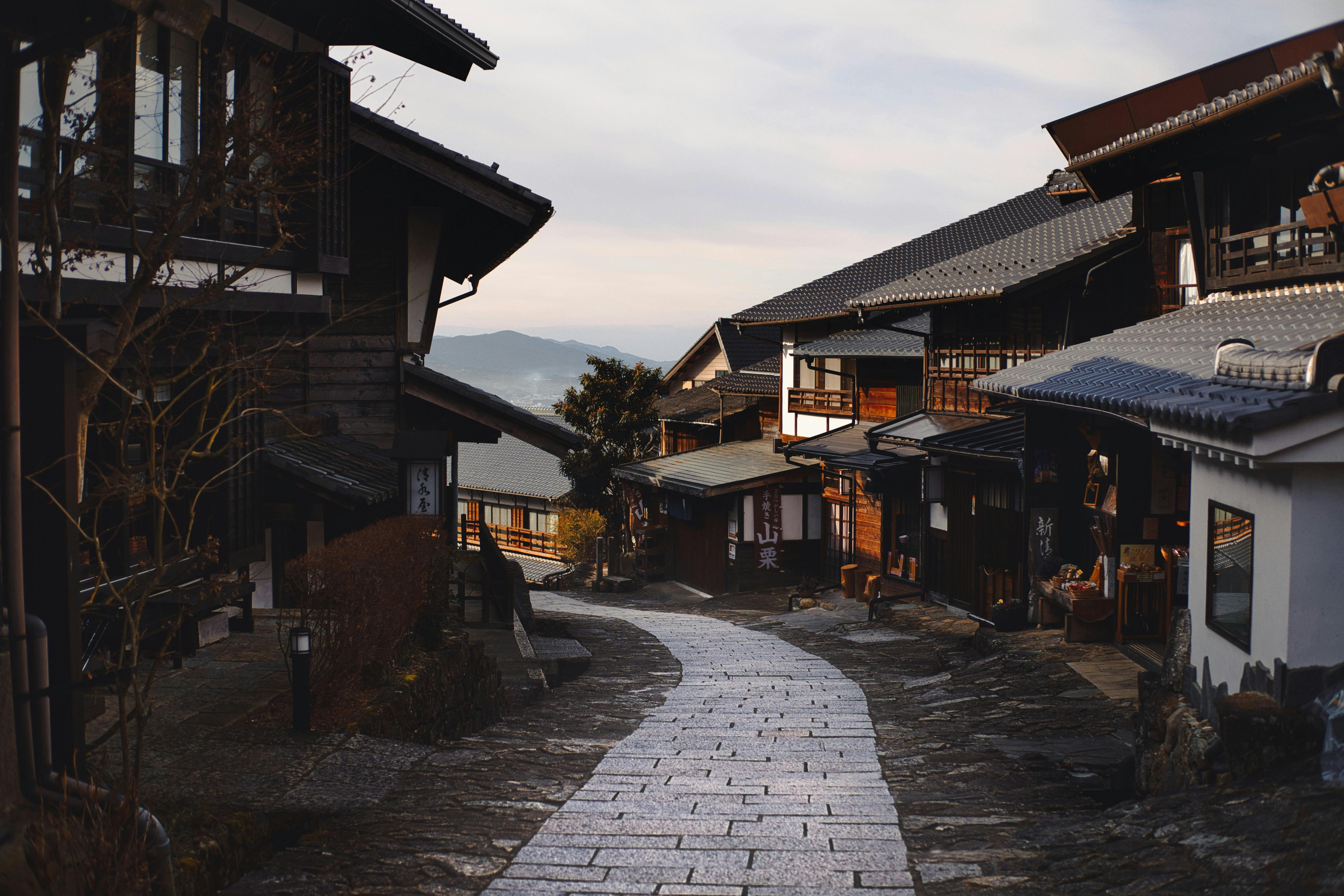
The viral narrative is simple: Japan has millions of empty houses, shrinking towns are desperate for people, and you can get a house for the price of a used car. That's all technically true. But it leaves out the most important part - what these communities actually need from newcomers, and why many people who show up end up leaving.
This isn't a guide to buying cheap houses. It's a guide to understanding what a depopulating community is offering and what it's asking for in return.
The Scale of What's Happening
Japan's population declined by 908,574 people in 2024 - the largest annual decline on record and the 16th consecutive year of decrease. Only 686,061 babies were born, the first time births fell below 700,000 since records began in 1899. The total fertility rate hit 1.15, down from 1.2 the year before. The decline is advancing faster than experts predicted - births weren't expected to fall this low until 2039.
A 2024 study by the Population Strategy Council identified 744 municipalities that could effectively disappear by 2050 - towns where the population of women aged 20-39 would decline by more than 50%. Only the Tokyo region recorded slight population growth. Every other prefecture is shrinking.
What Towns Actually Want
These communities aren't simply looking for warm bodies to fill vacant houses. They want active community members who will contribute to local life.
Skills in demand
- IT and remote work: Japan projects a shortage of 220,000 IT professionals by 2025-2026. Remote workers who bring outside income while living locally are highly valued.
- Healthcare: Nursing has a job-to-applicant ratio of 3.7 - even more acute in rural areas where aging populations need more care but professionals are scarce.
- Agriculture, forestry, and fisheries: Many towns need people to take over farms and fishing operations as elderly practitioners retire.
- Education: Small schools are closing due to insufficient enrollment. Families with children can keep schools open - which itself attracts more families.
- Entrepreneurship: Cafes, guesthouses, artisan workshops, tourism operations - anything that creates local economic activity.
Community participation expectations
Nearly all rural communities have a chonaikai (neighborhood association). While technically voluntary, non-members are often somewhat excluded from community life. Membership involves paying small fees and participating in seasonal cleaning, disaster drills, garbage area maintenance, local festivals, and information distribution.
Towns want residents who will attend matsuri (festivals), join volunteer fire brigades, participate in agricultural cooperatives, and show up for community work days like brush clearing and ditch maintenance. This isn't optional in spirit, even if it is on paper.
The Chiiki Okoshi Kyoryokutai Program
Japan's flagship program for reversing rural decline. Launched in 2009 with just 89 participants, it has grown to approximately 6,000 members across 1,100+ municipalities. The government targets 10,000 participants by 2026.
How it works
- Urban residents (mostly 20s-30s) apply to specific municipal positions and relocate to a depopulating community
- Term: 1 to 3 years (up to 4 years under recent revisions)
- Salary: 160,000-233,000 yen/month (annual cap 2.8M yen)
- Activity expenses: up to 2 million yen additionally for project costs
- Housing is typically provided or subsidized
What participants do
Develop regional brands, work in agriculture and forestry, run tourism initiatives, coordinate community events, renovate abandoned houses, set up IT infrastructure, manage town social media.
65% of participants remain in the community after their term ends. Many start businesses or find local employment. Non-Japanese citizens do participate, including members from South and Southeast Asia.
This is your best structured entry point. The program provides income, housing, community connections, and a clear purpose. It's designed to let you test whether rural life works for you - with support - before committing permanently.
Towns That Got It Right
Kamiyama, Tokushima
Population peaked at 21,000 in 1950, fell to about 5,700. Rather than fighting inevitable decline, the town embraced "creative depopulation" - accepting overall decline while stabilizing demographics. Target: maintain 300 children under 15 (minimum for an elementary school), requiring 5 families per year to move in. Tokushima Prefecture's fiber-optic network brought 16 IT companies to open satellite offices. Now known as a hub of creativity and innovation despite being a 5,000-person mountain town.
Ama-cho, Shimane (Oki Islands)
Island township of 2,300 residents that was nearly bankrupt. Between 2004 and 2020, accepted 779 new residents. Key move: the Oki Dozen High School Attractiveness Project transformed a dying school (89 students in 2008) into a destination that attracted 180 students from across Japan by 2017. Motto: "What we haven't got, we do without."
Nishiawakura, Okayama
Population 1,480. 95% mountainous forest. Launched a 100-Year Forest Vision focused on sustainable forestry rather than subsidies. Over 100 young people have moved in, 13 startups launched with combined annual sales over 800 million yen. Won the Japan Times Excellence in Sustainability Prize.
What New Residents Get Wrong
- Not participating in community life. The most damaging mistake. Skipping chonaikai meetings, not showing up for festivals, avoiding communal clean-up days - this signals disrespect and guarantees isolation.
- Language barriers. In rural Japan, English is virtually non-existent. Even basic Japanese opens doors enormously. Without it, integration is almost impossible.
- Expecting urban conveniences. Limited medical facilities, no late-night convenience stores, long drives for basic shopping. People who expect city-level services become frustrated fast.
- Privacy expectations. In small communities, news about your activities spreads quickly. This can feel invasive if you're used to urban anonymity.
- Treating it as real estate only. Buying an akiya without intending to genuinely participate in the community is noticed and resented. Towns prefer people who are there to live, not just to own property cheaply.
- Not being patient. Integration takes years, not months. Trust is built through consistent presence and contribution.
The Ecological Argument
There's a powerful and underreported dimension to rural repopulation. A major study published in Nature Sustainability (June 2025) found that human depopulation actually hurts biodiversity in Japan's satoyama (rural-agricultural) landscapes.
The mechanism: when younger residents leave and older farmers retire, irrigation ditches clog, rice paddies dry out, forests become overgrown. The managed mosaic of environments that supported high biodiversity collapses into monotonous overgrowth. Fireflies lose breeding sites. Grassland birds lose habitat.
Moving to a depopulating area and maintaining traditional landscape management - farming rice paddies, managing forest edges, clearing irrigation channels - is not just a lifestyle choice. It's an act of ecological conservation.
Support Programs Beyond Grants
- Akiya banks: Databases of vacant homes available for sale or rent, often at nominal prices or free
- Renovation subsidies: Many programs cover a significant portion of renovation costs
- Farming support: Training, mentorship, and financial assistance for newcomers (e.g., Kochi Prefecture's New Farmer Program)
- Trial living (otameshi ijuu): Stay in a trial house for ~1,000 yen/day for up to 30 days to test whether the area suits you
- Community integration: Language classes, organized social events, community mentors in some municipalities
Practical Advice
- Do a trial stay first. Experience winter, not just summer.
- Learn Japanese before you go. Even JLPT N4-N3 level transforms the experience.
- Visit multiple times across seasons. Paradise in autumn may be brutally isolating in February.
- Join the chonaikai immediately. Pay the fees, show up for meetings. This is the price of admission.
- Bring income or a business plan. Remote work, a needed skill, or a viable business idea.
- Look for towns with proven newcomer track records. Kamiyama, Ama-cho, Nishiawakura have infrastructure for integrating outsiders.
- Have realistic expectations about akiya. A "free" house likely needs 3-10 million yen in renovations.
- Commit for real. Five years minimum. Short-term residents are viewed skeptically.
The deal is straightforward: Depopulating towns offer housing support, financial incentives, and a community that genuinely wants you there. In return, they want you to show up, participate, contribute, and stay. If you're willing to do that, rural Japan can be one of the most rewarding places to live in the world.
Interested in rural Japan?
We help people find the right community match - towns with active newcomer programs, English support, and the infrastructure to welcome foreign residents.