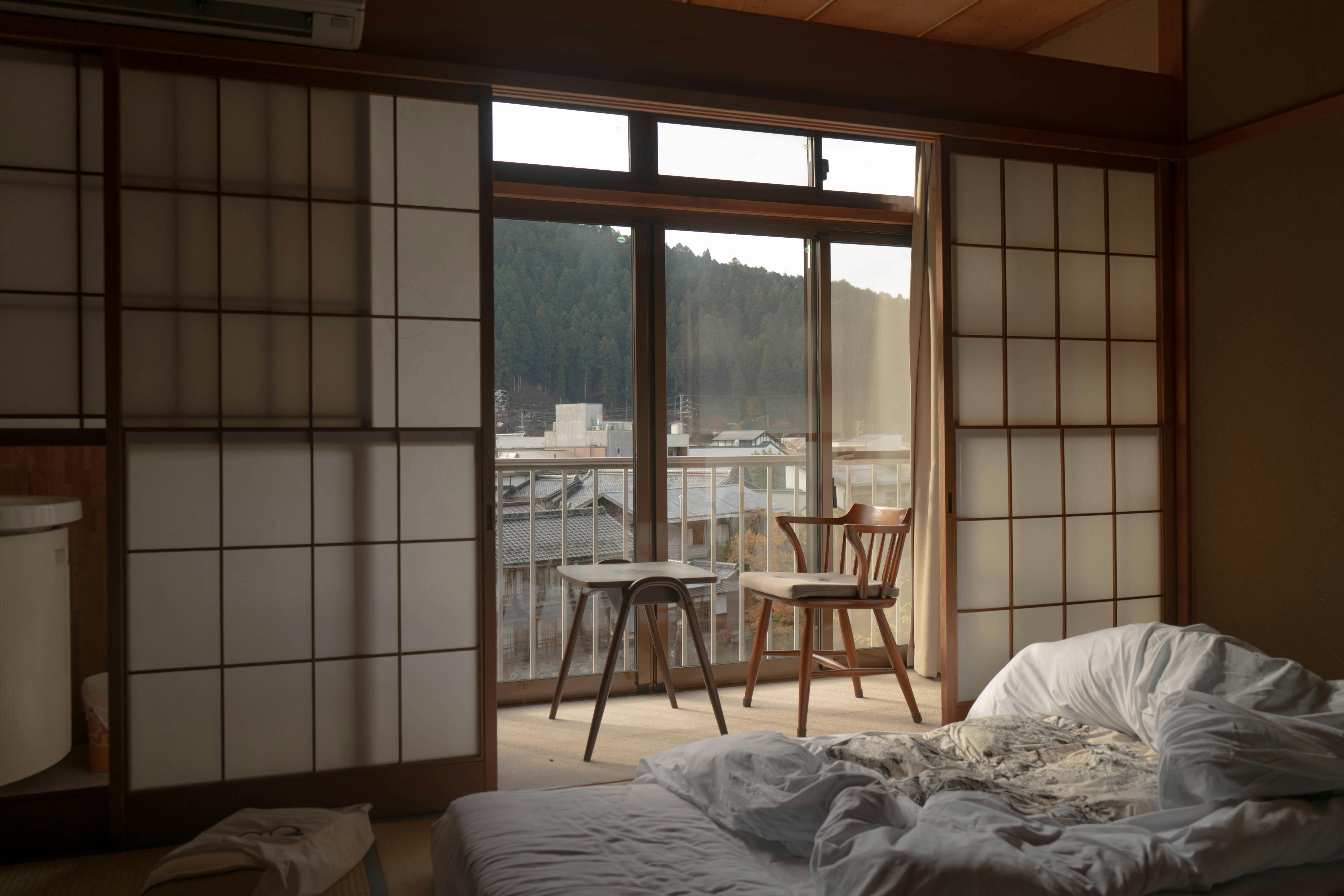
You found a house in Japan. The listing price looks incredible compared to what you'd pay back home. The photos show tatami rooms, a little garden, maybe a view of mountains. It's tempting to just buy it.
Don't. Not yet.
Japanese real estate has its own logic. Buildings depreciate. Earthquake codes changed twice. Hazard zones are mapped down to the block. Some homes literally cannot be rebuilt once they fall down. And a cheap house that needs 10 million yen in repairs isn't cheap at all.
This guide is your checklist. It covers every major thing you need to evaluate when browsing Japanese homes — from the materials the walls are made of to whether the property sits in a landslide zone. Use it before you commit to anything.
Construction Materials: What's the House Made Of?
The first thing to check on any Japanese listing is the construction type. It's listed as a short code — usually W, S, RC, SRC, or LS. Each has a different lifespan, earthquake behavior, insurance cost, and resale trajectory. Here's what they mean.
Wood Frame (mokuzou / 木造)
The most common construction type in Japan, especially for detached houses. Traditional post-and-beam timber framing. About 90% of standalone homes outside major cities are wood.
- Tax depreciation life: 22 years. After that, the building's assessed value is essentially zero for tax purposes — though it can still be perfectly livable.
- Actual lifespan: 30-80+ years with proper maintenance. Unmaintained, they deteriorate fast.
- Pros: Affordable, good natural ventilation, relatively easy to renovate. Wood-frame is what most contractors know how to work with.
- Cons: Vulnerable to termites, fire, and moisture damage. Minimal sound insulation. Older wooden homes often have poor or zero insulation in the walls.
Light Steel Frame (keiryou tekkotsu / 軽量鉄骨)
Prefabricated homes from manufacturers like Daiwa House, Sekisui House, and Toyota Home. Factory-built steel skeleton assembled on-site. Common in suburban developments from the 1970s onward.
- Tax depreciation life: 19-27 years depending on gauge thickness.
- Actual lifespan: 30-50 years. More resistant to termites than wood but still vulnerable to corrosion over time.
- Pros: Consistent quality (factory-built), faster construction, better earthquake performance than older wood-frame.
- Cons: Harder to renovate — modifications to the steel skeleton are difficult and expensive. Poor sound and thermal insulation unless upgraded.
Steel Frame (S-zou / S造)
Heavy steel columns and beams. Mostly used for commercial buildings and larger apartment buildings, but occasionally in high-end residential.
- Tax depreciation life: 34 years.
- Pros: Allows large open floor plans. Good flexibility for commercial/mixed use.
- Cons: Weak fire resistance without coatings (steel loses strength at high temperatures). Susceptible to corrosion. Sound insulation can be poor depending on wall construction. More expensive than wood.
Reinforced Concrete (RC / 鉄筋コンクリート)
Concrete poured around steel rebar. The standard for apartment buildings (mansions) in Japan. Occasionally used for detached houses in urban areas.
- Tax depreciation life: 47 years.
- Actual lifespan: 60-100+ years with maintenance.
- Pros: Excellent fire resistance, sound insulation, and durability. Strong earthquake performance. Best resistance to moisture and pests.
- Cons: Expensive to build and renovate. Heavy, requiring strong foundations. Poor natural ventilation. Condensation can be an issue if ventilation is inadequate.
Steel Reinforced Concrete (SRC / 鉄骨鉄筋コンクリート)
Steel frame embedded within reinforced concrete. The strongest and most expensive option. Used for high-rise buildings and premium construction.
- Tax depreciation life: 47 years.
- Pros: Best-in-class earthquake resistance. Combines the flexibility of steel with the durability of concrete. Superior fire and sound performance.
- Cons: Highest construction cost. Rarely seen in the residential homes most foreign buyers are looking at.
Bottom line: For detached houses, you're almost always looking at wood frame or light steel frame. Wood is fine — Japan has built with it for centuries. What matters more than the material is the construction year and maintenance history.
Construction Year: The Dates That Matter
Japan has updated its earthquake building codes twice in recent history. The year a house was built tells you which set of rules it was designed under, and that directly affects safety, insurability, and resale value.
Pre-1981: Old Earthquake Code (kyuu-taishin / 旧耐震)
Buildings designed before June 1981 were built under Japan's old seismic standard. This standard was significantly weaker than what followed. In every major earthquake since — Kobe 1995, Tohoku 2011, Kumamoto 2016 — pre-1981 buildings have suffered disproportionate damage and collapse.
Buyer warning: A pre-1981 wooden home that hasn't been seismically retrofitted is a serious risk. Retrofitting alone can cost 1.5 to 3 million yen, sometimes much more. Many buyers consider this a hard dealbreaker.
1981-2000: New Earthquake Code (shin-taishin / 新耐震)
The 1981 revision was massive. Buildings under the new code are designed to avoid collapse in a major earthquake (roughly magnitude 6-7). This is the minimum standard most buyers should look for.
However, wooden homes built between 1981 and 2000 still have a gap. The 1981 code didn't require ground investigation before building, and the rules for wall balance and foundation type were less strict.
Post-2000: Modern Standard
The 2000 revision (specifically targeting wooden construction) added three important requirements:
- Ground investigation before building — so the foundation matches the actual soil conditions.
- Wall balance requirements — earthquake-resisting walls must be evenly distributed, not clustered on one side.
- Betakiso (mat foundation) became the standard for wooden homes — a continuous concrete slab instead of just strips under load-bearing walls.
| Year Built | Risk Level | Notes |
|---|---|---|
| Pre-1981 | High | Old earthquake code. Seismic retrofit strongly recommended before occupancy. |
| 1981-2000 (wood) | Moderate | Meets shin-taishin but may lack proper ground investigation and wall balance. |
| 1981-2000 (RC/SRC) | Low-Moderate | Meets shin-taishin. RC/SRC inherently stronger than wood for this era. |
| Post-2000 | Low | Meets all modern standards including ground investigation and improved framing. |
The simple rule: Post-2000 is ideal. Post-1981 is acceptable. Pre-1981 requires careful evaluation and budget for seismic work.
Hazard Zones: Check the Map Before You Buy
Japan maps natural hazard zones in extraordinary detail and makes them publicly available. Since 2020, real estate agents are legally required to tell buyers if a property is in a designated flood zone. But they're not required to volunteer everything — so check yourself.
The national hazard map portal is at disaportal.gsi.go.jp. Use the "Kasaneru Hazard Map" tool to enter any address and toggle hazard layers. Here's what to look for, ranked by how much it should worry you.
1. Landslide Zones (doshasaigai / 土砂災害) — Most Critical
This is the hazard that should scare you the most. Landslides are sudden, deadly, and they destroy everything in their path.
- Yellow zones (keikai kuiki / 警戒区域): Areas where sediment disasters may occur. Building is permitted but you should have an evacuation plan.
- Red zones (tokubetsu keikai kuiki / 特別警戒区域): Risk of building destruction. Structural reinforcement may be required, and certain types of construction are restricted.
Here's the part that matters most for your wallet: rain-triggered landslide damage is NOT covered by standard fire insurance. You need a separate water-disaster rider. And some insurers restrict or outright refuse coverage for homes in designated landslide zones, on hillsides, or near cliffs. If you can't insure it properly, don't buy it.
2. Flood Zones (kouzui / 洪水)
Japan's most frequent natural disaster. Hazard maps show projected inundation depth by color: light yellow is about 0.5 meters, orange is 1-2 meters, and red or brown means 3 meters or more.
Standard fire insurance does NOT include flood coverage. You must add a water-disaster rider. Properties in deep-red flood zones face higher premiums and may have restrictions. Check both river flooding and inland drainage overflow maps.
3. Tsunami Zones (tsunami / 津波)
Maps show projected wave height based on worst-case earthquake scenarios. Coastal areas, river mouths, and low-lying bays are most at risk. While less frequent than floods, the consequences are total. Properties in designated tsunami inundation zones take a significant hit on resale value.
4. Liquefaction Zones (ekijouka / 液状化)
During an earthquake, saturated loose soil can behave like liquid, causing buildings to tilt, sink, or have their foundations destroyed. Most common on reclaimed land, former riverbeds, and coastal landfill areas. Ground reinforcement exists but is costly. Ask the local government office for their liquefaction risk map.
5. Volcanic Zones (kazan / 火山)
Only relevant near active volcanoes (Hakone, Aso, Sakurajima, parts of Hokkaido). Maps show pyroclastic flow, lava flow, and ashfall zones. Volcanic damage is excluded from standard fire insurance. Relatively rare and geographically concentrated, so this is the least likely hazard to affect most buyers.
The insurance takeaway: Japanese home insurance is modular, not bundled. Standard fire insurance covers fire, lightning, and wind. Everything else — flood, earthquake, landslide, tsunami, volcanic — requires separate riders. Check what you can actually insure before committing to a property in a hazard zone.
The Physical Inspection: What to Check in Person
Japan doesn't have a strong culture of pre-purchase home inspections. That doesn't mean you should skip one. A professional inspection (kenchiku bukken chosa) costs 50,000-100,000 yen and can save you millions. Here's what to focus on.
Termites (shiroari / シロアリ)
Two species cause most damage: yamato shiroari throughout Japan (except Hokkaido) and ie shiroari along warmer coastal regions. Vacant homes are at extreme risk because infestations go unchecked for years.
- What to check: Tap wooden beams and columns — hollow sounds mean damage. Look for mud tubes along foundations. Check for sagging floors near bathrooms and kitchens where moisture attracts termites.
- Inspection cost: 10,000-30,000 yen. Always do this before buying.
- Treatment cost: 100,000-300,000 yen for chemical barrier treatment. If structural beams need replacing, add 150,000+ yen per beam.
Asbestos (asubesuto / アスベスト)
Sprayed asbestos was banned in 1975. But asbestos continued to be used in roofing tiles, flooring tiles, cement board, ceiling tiles, and insulation all the way until 2006, when a complete ban took effect. An estimated 2.8 million private buildings in Japan contain asbestos.
Asbestos is safe when left undisturbed. The danger comes during renovation, when materials are cut, drilled, or broken. Since 2023, any renovation of a pre-2006 building requires a mandatory asbestos survey before work begins. Factor this into your renovation timeline and budget.
Foundation Type
- Betakiso (ベタ基礎 / mat foundation): A continuous concrete slab under the entire building. The standard since 2000. Superior moisture barrier, better termite resistance, and even weight distribution. This is what you want.
- Nunokiso (布基礎 / strip foundation): Concrete strips only under load-bearing walls, with exposed soil between them. Common in pre-2000 homes. Higher risk of moisture problems and termite access from below.
- Dokuritsu kiso (独立基礎 / point foundation): Individual concrete pads under each post. Found in very old and traditional homes. Weakest seismic resistance.
Roof Condition
Look for missing, cracked, or displaced tiles. Rust on metal roofing. Moss growth (indicates chronic moisture). A sagging ridgeline means structural problems in the roof frame. Inside, check every ceiling for water stains — especially on upper floors.
Partial roof repair runs 300,000-1,000,000 yen. Full replacement can reach 3,500,000 yen.
Water Damage and Mold (kabi / カビ)
Japan's humid climate, particularly during the rainy season (tsuyu), makes moisture damage extremely common. Check for water stains on ceilings and walls, musty smells, warped flooring, peeling wallpaper, and condensation on windows. Inspect the crawl space under the floor (yukashita) for standing water or damp soil.
Plumbing: Lead Pipes and Septic Systems
Homes built before the 1980s may have lead water supply pipes. Ask the local water authority whether the property has lead service lines. If present, budget for replacement.
For wastewater, check whether the property connects to municipal sewer (gesui) or uses an on-site septic system (joukasou). Old-style single-function septic systems (tandoku joukasou) that only treat toilet waste are being phased out. A modern combined system (gappei joukasou) costs 1.5-2.5 million yen to install, though many municipalities offer subsidies.
Electrical System
Older homes often have undersized electrical panels that can't handle modern appliances, air conditioning, and heating. Rewiring and a new panel costs 300,000-600,000 yen.
Legal Deal-Breakers: Check Before You Get Emotionally Attached
Road Access and Rebuilding Rights (saiken fuka / 再建築不可)
This is one of the most consequential checks in Japanese real estate, and the one that catches the most foreign buyers off guard.
Under Japan's Building Standards Act, a property must have at least 2 meters of frontage on a road that is at least 4 meters wide to have rebuilding rights. If it doesn't meet both requirements, the property is classified as saiken fuka — meaning the current building can be renovated, but once it's demolished, nothing new can be built on the land.
What you can do with a saiken fuka property: live in it, renovate the existing structure, rent it out. What you can't do: demolish and rebuild, get bank financing (nearly impossible), or easily resell (extremely limited buyer pool).
Why saiken fuka properties are cheap: The market is pricing in the fact that the property has an expiration date. Discounts are typically 30-50% compared to buildable land. This is not a bargain — it's a liability with a countdown.
Property Boundaries (kyoukai / 境界)
Historical land surveys in Japan used imprecise methods, so recorded areas often don't match reality. Request a kakutei sokuryo (確定測量) — a confirmed boundary survey involving on-site agreement with all adjacent property owners. Without this, you risk paying for land you don't actually own, or building on a neighbor's parcel.
Land Lease vs. Freehold
Most properties are freehold (shoyuken / 所有権) — you own both the building and the land outright. But some are leasehold (shakuchiken / 借地権), where you own the building but rent the land from a separate owner.
Leasehold properties are typically 60-70% cheaper than freehold equivalents. The trade-off is ongoing ground rent and lease terms that affect your flexibility and resale value. Know which you're buying.
Zoning: Agricultural Land Restrictions
Land registered as agricultural (nochi / 農地) has legal restrictions. You cannot simply buy a rice paddy and build a house without permission from the local agricultural commission. If the listing sits on agricultural land, confirm the zoning allows your intended use before making an offer.
Red Flags: When to Walk Away
Not every cheap house is a deal. Here are the situations where you should seriously consider moving on.
- Saiken fuka designation — unless you fully understand the implications, are paying cash, and plan to live there long-term.
- Pre-1981 construction with no seismic retrofit — the cost of structural reinforcement on top of all other renovations usually makes it uneconomical.
- Severe structural damage — tilting foundations, cracked load-bearing walls, a heavily sagging roofline. These are symptoms of problems that multiply once you open up the walls.
- Extensive termite damage to structural beams — if the skeleton of the house is compromised, you're not renovating. You're rebuilding.
- Active roof leaks with long-term water penetration — a leaking roof is never just a roof problem. Water destroys rafters, insulation, wiring, walls, and floors.
- Red zone landslide area — genuine safety risk, insurance complications, and declining property value as climate change intensifies rainfall.
- Complicated ownership chains — properties with unresolved inheritance spanning generations. One documented case had 93 people listed as heirs. Getting universal agreement to sell can be impossible.
- Vacant for 5+ years — long vacancy causes compounding damage. Termites, mold, roof deterioration, plumbing failure, and animal intrusion all accelerate when nobody is maintaining the property.
- Renovation estimate exceeds post-renovation market value — if a 300,000-yen house needs 5 million yen in work but would only be worth 3 million yen after renovation, the math doesn't work.
The Japanese saying: "Tada yori takai mono wa nai" — nothing is more expensive than something free. Sellers offering properties for zero yen are unloading a burden. A leading Japanese rehabilitation firm rejects 9 out of 10 akiya brought to them. If professionals pass on 90% of these properties, that should calibrate your expectations.
Renovation Costs: What the Numbers Actually Look Like
If you're buying an older or vacant home, renovation is where the real spending happens. The purchase price is often the smallest line item.
| Budget Tier | Cost (Yen) | What You Get |
|---|---|---|
| Emergency fixes | ~500,000 | Fix leaks, electrical hazards, immediate safety issues only. |
| Basic livability | ~2,000,000 | Electrical updates, plumbing repairs, new flooring, paint, minor roof repair. |
| Comfortable modern | ~5,000,000 | Modern kitchen and bathroom, insulation, heating system, plus everything above. |
| Full renovation | 6-12 million | Comprehensive renovation of most systems and finishes throughout the home. |
| Full gut renovation | 13-20+ million | Complete remodel including structural reinforcement, new roof, all new systems. |
The 20-30% rule: Always add 20-30% to any renovation estimate for unexpected discoveries. Opening up walls and floors in old Japanese homes regularly reveals problems that weren't visible during inspection.
Livability: The Stuff That Doesn't Show Up on Listings
A house is only as good as the life you can live in it. Before buying, check these practical factors that determine day-to-day reality.
Station Access and Transportation
In rural Japan, a car is not optional — it's a necessity. If the property isn't within walking distance of a train station, factor in car ownership costs: mandatory vehicle inspections (shaken) every two years at 100,000-200,000+ yen, insurance, fuel, and tax. A kei car (light vehicle) is significantly cheaper to own and is the practical choice for rural life.
For properties near a station, verify the actual walk time (listings calculate at 80 meters per minute, which is optimistic), train frequency, last train time, and whether express services stop there.
Snow Country (yukiguni / 雪国)
Properties on the Sea of Japan coast, in Hokkaido, Tohoku, Niigata, or northern Nagano get serious snowfall. Roof design matters — steep pitched roofs let snow slide off, but flat roofs require manual removal up to twice a month. Snow loads in heavy regions can reach 2,000 kg per square meter. Heating costs run significantly higher, and some areas become effectively snow-locked in winter. Pipes freeze if not properly insulated.
Internet Availability
Critical if you work remotely. Fiber optic (hikari) is available in most areas at 4,500-6,500 yen per month, but coverage isn't guaranteed in remote mountain or island locations. Check NTT East/West by postal code before buying. For truly remote areas without fiber, Starlink is now available in Japan at about 12,300 yen per month with a 73,000-yen equipment cost. Always verify at the exact address — coverage maps can be optimistic.
Medical Facilities
In depopulated rural areas, the nearest hospital may be 30-60+ minutes away by car. Specialist care often requires travel to the nearest city. For families with children or elderly household members, check the distance to the nearest hospital, clinic, and pharmacy. This is non-negotiable for long-term livability.
The Depopulation Factor
Japan's rural depopulation is causing cascading infrastructure decline — supermarkets closing, schools consolidating, bus routes being cut, roads deteriorating. A property that seems livable today may become increasingly isolated as the surrounding community shrinks. Check the municipality's population trends before buying. If the population has been dropping steadily for decades with no sign of stabilization, factor that into your long-term calculus.
Need help evaluating a property?
We help foreign buyers navigate inspections, hazard checks, and the legal details that determine whether a property is a sound investment or a money pit.