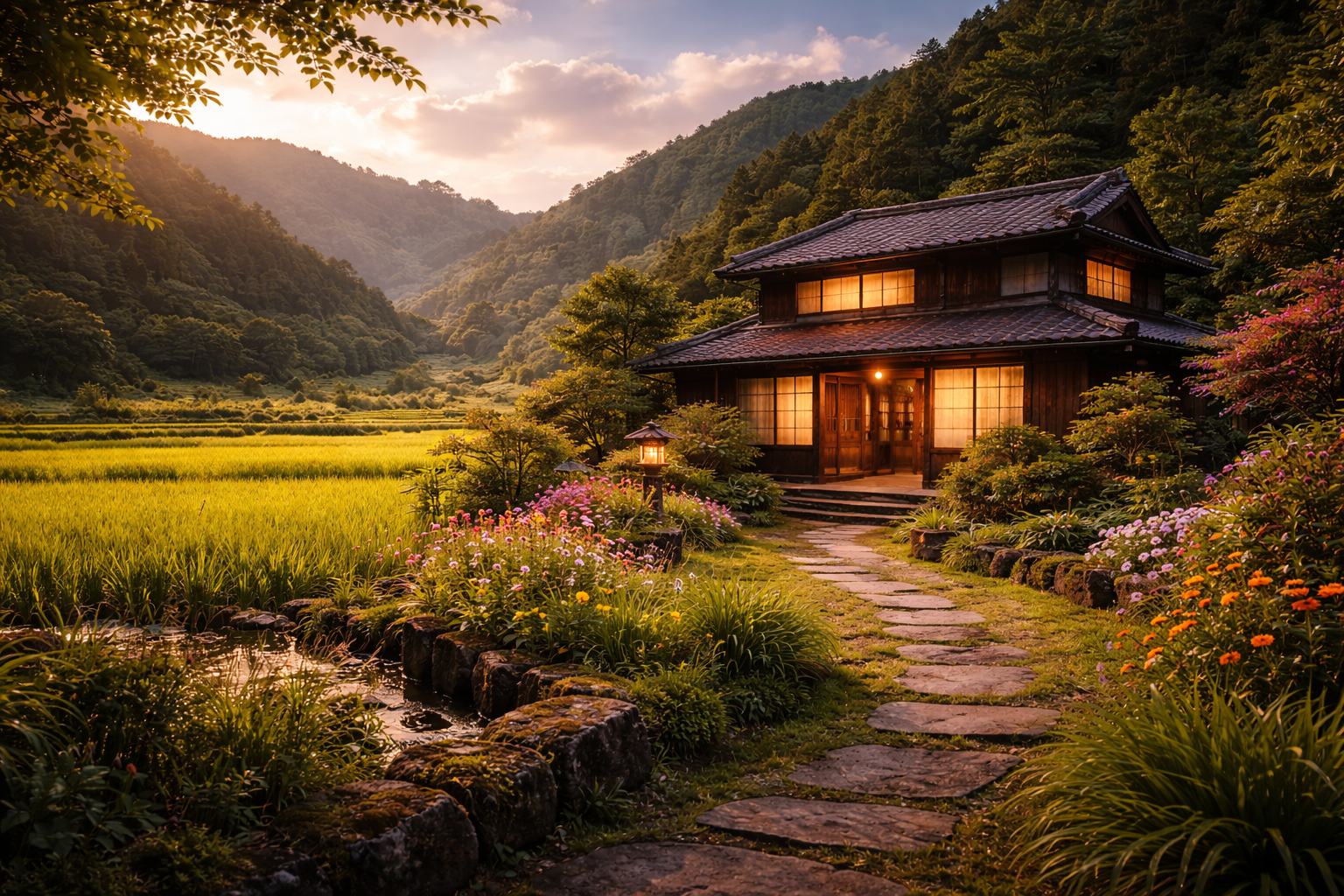
Japan has a problem it can't ignore. Rural towns are losing people faster than they can replace them. Over 9 million homes sit vacant across the country. Entire villages have more empty houses than occupied ones. Schools are closing, hospitals are shutting down, and local economies are collapsing.
The government's response has been aggressive: pay people to relocate. The national government offers a base grant of up to 1 million yen per person (or 3 million per household with children) for anyone willing to leave a major metro area and settle in a participating rural municipality. But that's just the starting point. Dozens of towns stack their own local incentives on top - covering everything from home purchases to renovation costs to childcare bonuses.
The result is a patchwork of relocation programs across Japan, some offering over 5 million yen (roughly $33,000+) to the right applicant. We've verified 15 of the most notable programs running in 2026.
How Grant Stacking Works
Most of these programs combine two layers of funding:
- National grant (ijuu shien-kin) - the central government's relocation support program, administered through prefectures. Up to 1M yen for singles, 2M for couples, and an extra 1M per child under 18. Requires moving from a Tokyo-area metro (Tokyo, Saitama, Chiba, Kanagawa) or another designated urban zone.
- Local municipal grants - towns add their own incentives on top. These vary widely and can include home purchase subsidies, renovation grants, childcare bonuses, farming startup funds, and moving expense reimbursements.
A family of four moving from Tokyo to certain towns can stack national and local grants to reach 5 million yen or more. The key is matching your situation - family size, origin, occupation, home buying plans - to the right town's program.
The 15 Towns
Listed from highest to lowest maximum grant value. All figures are approximate maximums - actual amounts depend on your household composition and which specific bonuses you qualify for.
1. Miyakonojo, Miyazaki
Max grant: 5M+ yen (~$33,000+) | Commitment: 5 years | Best for: Families relocating from Tokyo metro
Miyakonojo stacks one of the most generous local packages in southern Japan on top of the national grant. Families with children get the biggest payouts. The city is Miyazaki's second-largest, so you get small-city infrastructure with rural grant money. Requires Tokyo-area origin for the national component.
2. Mishima, Kagoshima
Max grant: 4M+ yen (~$27,000+) | Commitment: 3 years | Best for: Adventurous types open to island life
Mishima is a cluster of volcanic islands south of mainland Kagoshima. The local government offers substantial relocation grants plus farming support programs. The shorter 3-year commitment makes this more accessible, but you're committing to genuine island isolation. Ferry access only.
3. Tsuruoka, Yamagata
Max grant: 4M+ yen (~$27,000+) | Commitment: 5 years | Best for: Homebuyers and remote workers
Tsuruoka is a UNESCO Creative City of Gastronomy with a strong local food culture. The city offers home purchase subsidies that stack well with national grants. Remote workers are specifically welcomed - the city has been building coworking infrastructure to attract them. Cold winters, but four distinct seasons and access to both mountains and the Sea of Japan coast.
4. Ikeda, Fukui
Max grant: 3M+ yen (~$20,000+) | Commitment: 5 years | Best for: Families willing to integrate into a tight community
Ikeda is small - under 3,000 people. The town takes community fit seriously and requires an interview process before approving relocation grants. If accepted, the support is strong: housing assistance, childcare benefits, and farming startup help. This one rewards people who genuinely want village life, not just the grant money.
5. Wakasa, Tottori
Max grant: 3M yen (~$20,000) | Commitment: 5 years | Best for: Home buyers ready to renovate
Wakasa's program targets people buying and renovating local properties. The catch: you must use local contractors for renovation work, which keeps the grant money circulating in the town's economy. It's a smart model that ties your incentive to genuine local investment. Tottori is Japan's least-populated prefecture, so land and homes are cheap to begin with.
6. Sado Island, Niigata
Max grant: 2M+ yen (~$14,000+) | Commitment: 5 years | Best for: Nature lovers, Tokyo-area origin
Sado is Japan's sixth-largest island and home to the famous crested ibis reintroduction program. The island's relocation grants combine national funding (Tokyo-area origin required) with local housing support. Sado has a surprisingly active cultural scene - taiko drumming, gold mine heritage, organic farming cooperatives. Ferry or short flight from Niigata city.
7. Bungotakada, Oita
Max grant: 2M+ yen (~$14,000+) | Commitment: 3 years | Best for: Entrepreneurs with a business plan
Bungotakada explicitly targets people who want to start businesses in the area. You'll need to submit a business plan as part of the application. The shorter 3-year commitment helps, and Oita prefecture's hot spring tourism economy gives new businesses a built-in customer base. The town also has a well-known retro shopping street revitalization project.
8. Minami-Alps, Yamanashi
Max grant: 2M+ yen (~$14,000+) | Commitment: 5 years | Best for: Akiya renovators, outdoor enthusiasts
Named after the mountain range it borders, this city focuses its grants on people buying and renovating vacant homes (akiya). The area has excellent access to hiking and climbing, and it's close enough to Tokyo for occasional trips. Yamanashi is also wine country - the local fruit farming economy is active and looking for new participants.
9. Kamiyama, Tokushima
Max grant: 1.2M+ yen (~$8,000+) | Commitment: 3 years | Best for: Remote workers, tech-minded relocators
Kamiyama is Japan's most famous "digital village." It attracted a wave of IT companies and remote workers over the past decade by investing in fiber optic infrastructure before most rural towns did. The grant amounts are modest, but the community of remote workers and creatives already there makes integration easier than most places. A proven model for location-independent workers.
10. Nagano Prefecture (77 municipalities)
Max grant: 1M+ yen (~$7,000+) | Commitment: Varies by town | Best for: Akiya hunters with flexibility on location
Nagano doesn't have a single standout program - it has 77 of them. Nearly every municipality in the prefecture participates in the national relocation grant, and many add local bonuses. The prefecture also runs one of Japan's most comprehensive akiya bank networks, making it easy to find vacant properties. Popular with people who want mountains, skiing, and relatively easy access to Tokyo via shinkansen.
11. Tsuwano, Shimane
Max grant: 1M+ yen (~$7,000+) | Commitment: 5 years | Best for: Tokyo-area origin, history and culture lovers
Tsuwano is sometimes called "Little Kyoto of San'in" for its historic samurai district and traditional streetscapes. The town offers national relocation grants (Tokyo-area origin required) and has an active community integration program. Shimane is one of Japan's most depopulated prefectures, so the need is real and the welcome is genuine.
12. Kagamino, Okayama
Max grant: 1M+ yen (~$7,000+) | Commitment: 5 years | Best for: Budget movers looking for akiya deals
Kagamino combines relocation grants with one of the better akiya programs in western Japan. Properties here can be extremely cheap - some listed for under 1 million yen. The grant essentially covers or exceeds the cost of the house itself in some cases. Classic satoyama landscape with managed forests and traditional charcoal production.
13. Kijo, Miyazaki
Max grant: 100K+ yen menu (~$700+) | Commitment: Varies | Best for: Families doing initial research
Kijo doesn't offer a single big grant - it uses a menu system of smaller incentives that you can combine. What makes it notable is the town's reconnaissance trip support: they'll help fund your exploratory visit so you can see the area before committing. Useful for people still in the decision-making phase. Family-focused programs with childcare and education support.
14. Shoo, Okayama
Max grant: Free trial housing | Commitment: None required | Best for: People who want to try before committing
Shoo's program is unique: up to 180 days of free trial housing. No financial commitment, no residency requirement. You live in the town, experience daily life, and decide if it's for you. This is the lowest-risk way to test rural Japan. The town has been running this program for years and has a good track record of converting trial residents into permanent ones.
15. Nagasaki Calling Nomads
Max value: 200K yen (~$1,300) in-kind | Commitment: 1-4 weeks trial | Best for: Digital nomads, overseas applicants
This is a prefecture-level program, not a single town grant. Nagasaki offers curated 1-4 week trial stays for remote workers, including accommodation and coworking space. The key difference: overseas applicants are explicitly welcome. Most other programs on this list require you to already be a Japan resident. This is a good entry point for people still abroad who want to explore rural Japan as a future base.
Who Qualifies
Eligibility varies by program, but patterns emerge across most of them:
- National grant (the big one) - requires moving from a designated urban area, usually the Greater Tokyo metro (Tokyo, Saitama, Chiba, Kanagawa). You must have lived or commuted there for a qualifying period (typically 5+ years within the past 10). Some prefectures have expanded this to include Osaka, Nagoya, and other metros.
- Residency commitment - most programs require you to stay for 3-5 years. Leave early and you may have to repay part or all of the grant.
- Employment or entrepreneurship - you generally need to either work remotely, find local employment, or start a business. Simply retiring to the area may not qualify you for the national grant component (though some local grants have no employment requirement).
- Japanese residency status - you need a valid visa that allows you to live in the area long-term. Most programs don't discriminate by nationality, but you need legal residency. The Nagasaki program is a rare exception that accepts overseas applicants for trial stays.
Common Catches
These grants are real, but they come with conditions worth understanding before you apply:
- Clawback clauses - leave before your commitment period ends and you'll likely repay a portion. Some towns require full repayment. Factor this into your planning.
- Budget caps - most towns have a limited number of grant slots per year. Popular programs fill up. Apply early in the fiscal year (April in Japan).
- Origin restrictions - the national grant component requires Tokyo-area origin for most programs. If you're moving from Osaka to rural Shimane, you may only qualify for the local component.
- Application bureaucracy - these are government programs. Expect paperwork in Japanese, processing times measured in months, and requirements that aren't always clearly documented online.
- Community expectations - rural Japanese towns expect participation. Neighborhood associations, seasonal festivals, communal maintenance - these aren't optional in the way they might be in a city. Some towns (like Ikeda) formally evaluate community fit before approving you.
- Infrastructure reality - the towns offering the biggest grants are often the most remote. Limited public transit, few English services, aging infrastructure. The money is good precisely because these places are hard to live in without a car and some Japanese ability.
Want the full breakdown? Our 2026 Japan Relocation Grant Guide covers eligibility rules, application timelines, how to stack national and local grants, and step-by-step instructions for applying - including what to do if you're still overseas.
Is It Worth It?
The grants alone won't make you rich. Even 5 million yen is modest when you factor in moving costs, setup expenses, and the income adjustment that often comes with leaving a major city.
But that's not really the point. The grants exist to lower the barrier. Combined with Japan's incredibly cheap rural housing - akiya properties regularly sell for under 5 million yen, and some towns give them away for free - the total cost of establishing yourself in rural Japan can be remarkably low.
The people who do best with these programs are the ones who actually want to live in rural Japan. The grant is a bonus, not the reason. If you're drawn to the pace, the landscape, the food culture, and the community life, the financial incentives just make it more practical to follow through.
If you're only in it for the money, you'll likely be miserable in a town of 3,000 people with one convenience store and no English signage. The grants come with strings because the towns need people who stay.
Ready to explore your options?
Check your eligibility and see which relocation grants match your situation.