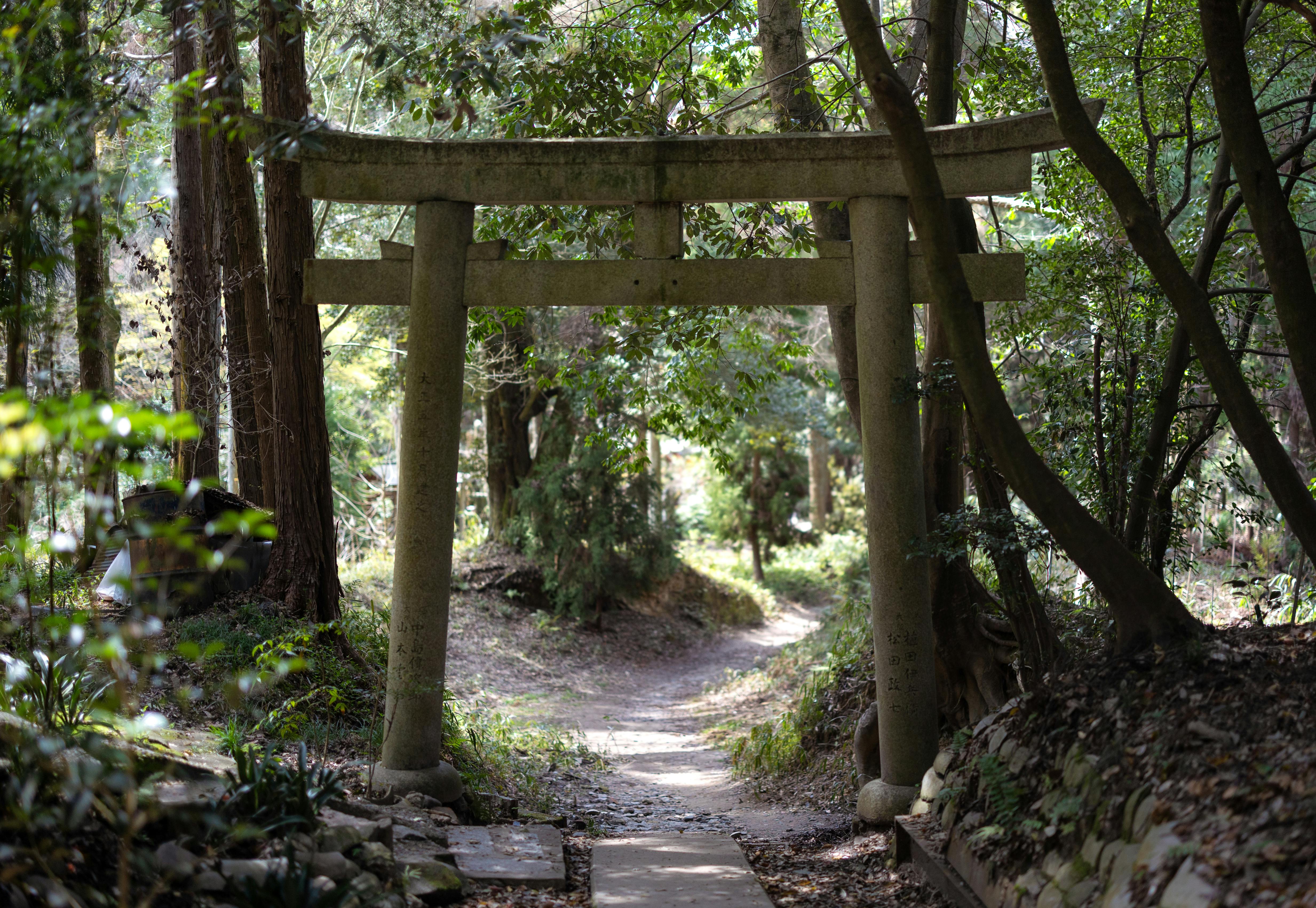
When people think about Japan's nature, they picture pristine wilderness - ancient forests, volcanic hot springs, snow-capped mountains. And those places exist. But the landscapes most critical to Japan's biodiversity aren't untouched at all. They're the ones that humans built and maintained for centuries.
They're called satoyama - and they're dying because nobody lives there anymore.
What Is Satoyama?
Satoyama literally translates to "village mountain." It describes the traditional landscape where human settlements meet forested hills - a mosaic of rice paddies, managed woodlands, bamboo groves, irrigation ponds, grasslands, and streams that Japanese communities maintained for hundreds of years.
This wasn't wilderness. It was agriculture. But it created something extraordinary: a patchwork of habitats far richer in species than either pure farmland or dense forest alone.
Think of it as an ecosystem that evolved with people, not despite them. The rice paddies doubled as wetlands. The coppiced woodlands provided charcoal and mushrooms while letting sunlight reach the forest floor. The irrigation channels connected habitats across entire valleys. The grasslands were burned and cut annually, preventing any single species from taking over.
For centuries, this worked. The people got food, fuel, and building materials. The wildlife got a diverse, interconnected landscape that supported thousands of species.
The Problem: Nobody's Tending the Landscape Anymore
Japan's rural population has been declining for decades. Young people leave for Tokyo, Osaka, and other cities. The farmers and foresters who maintained satoyama are aging out. Villages that once had hundreds of families now have dozens - mostly elderly.
When people leave, the landscape changes fast.
- Rice paddies go fallow - the wetland habitat vanishes within a single season. Frogs, dragonflies, and water beetles lose their breeding grounds.
- Forests close in - without coppicing and thinning, the canopy grows dense and dark. Wildflowers, butterflies, and ground-nesting birds disappear.
- Grasslands vanish - without annual cutting or burning, they're swallowed by forest in under a decade. Japan has lost over 90% of its semi-natural grasslands since the 1950s.
- Irrigation systems collapse - the carefully maintained network of channels, ponds, and terraces falls apart, fragmenting aquatic habitats.
- Invasive species move in - abandoned farmland is quickly colonized by aggressive plants like kudzu and bamboo that choke out native vegetation.
The result isn't a return to pristine nature. It's ecological collapse disguised as rewilding.
The Wildlife That Needs People
This is the part that surprises most people. Dozens of Japan's most iconic and endangered species don't live in remote wilderness. They live in - and depend on - landscapes shaped by human activity.
Japanese Giant Salamander
The world's second-largest amphibian. Lives in clean, cold streams connected to satoyama watersheds. When irrigation systems collapse, their habitat fragments.
Crested Ibis (Toki)
Went extinct in the wild in Japan in 2003. Reintroduced on Sado Island - where it depends entirely on organic rice paddies as feeding grounds.
Japanese Fireflies (Hotaru)
Their larvae develop in clean, slow-moving water - exactly the kind found in rice paddy irrigation channels. No paddies, no fireflies.
Asiatic Black Bear
Increasingly entering towns because the satoyama buffer zone between forest and settlement has disappeared. Without managed woodland edges, human-bear conflict rises.
Japanese Serow
This goat-antelope thrives in the mixed forest-grassland mosaic of satoyama. Dense, unmanaged forests push them into smaller and more fragmented ranges.
Dragonflies and Damselflies
Japan has over 200 species. Many breed exclusively in rice paddies and irrigation ponds. Japan's dragonfly diversity is directly tied to active rice cultivation.
There are also dozens of plant species - orchids, lilies, and gentians - that only grow in managed grasslands and light-filled woodland edges. When the management stops, they're shaded out within years.
Why "Just Rewild It" Doesn't Work Here
In some parts of the world, the best thing you can do for nature is leave it alone. Japan's satoyama isn't one of them.
These landscapes evolved over centuries of active management. The species that live there adapted to disturbance - seasonal flooding from rice cultivation, periodic cutting of grasslands, selective harvesting of woodland. Remove the disturbance and you don't get wild nature. You get dense, dark, low-diversity forest that supports a fraction of the species the managed landscape did.
Ecologists call this the "abandonment crisis" - and in Japan, it's considered as serious a threat to biodiversity as development or pollution. The Japanese Ministry of the Environment has identified satoyama conservation as a national priority. The Satoyama Initiative, launched at the UN Convention on Biological Diversity, specifically calls for maintaining human-influenced landscapes.
The science is clear: these ecosystems need people.
How Relocation Actually Helps
This is where the dots connect. Japan's government is actively paying people to move to rural areas through relocation grants - sometimes offering millions of yen per household. The towns offering these grants are almost all satoyama communities facing population collapse.
When you relocate to rural Japan, you're not just finding a cheaper place to live. You're joining a community that needs more people to maintain a landscape that thousands of species depend on.
Here's what that looks like in practice:
- Maintaining rice paddies - even small-scale organic rice farming preserves wetland habitat. Several grant towns specifically support new farmers.
- Managing woodlands - communities organize seasonal tree thinning and undergrowth clearing. More residents means more hands for this work.
- Keeping irrigation systems alive - channels, ponds, and terraces need annual maintenance. As community members, residents contribute to this upkeep.
- Occupying vacant homes - abandoned akiya attract pests and invasive species. Renovation and occupation reverses this.
- Supporting local economies - a functioning rural economy keeps farmers farming and foresters foresting. Every new resident buying local food contributes.
You don't have to become a farmer to help. Simply living in a rural community, participating in seasonal maintenance events (called satoyama hozen), shopping at local markets, and occupying a vacant house all contribute to keeping the landscape functional.
Towns That Need You - And Their Ecosystems
Many of the towns offering Japan's most generous relocation grants sit in prime satoyama territory:
- Mishima, Kagoshima - volcanic island satoyama with subtropical forest edges and unique insect populations
- Tsuruoka, Yamagata - UNESCO-recognized food culture built on satoyama land management. Home to over 60 varieties of indigenous crops
- Kamiyama, Tokushima - mountain valley satoyama surrounded by some of Shikoku's richest forest corridors
- Sado Island, Niigata - the crested ibis reintroduction site. Organic rice farming here directly feeds Japan's most famous conservation success story
- Minami-Alps, Yamanashi - gateway to alpine-satoyama transition zones with exceptional butterfly and wildflower diversity
- Kagamino, Okayama - classic satoyama landscape with maintained charcoal-production forests and traditional grassland management
Our 2026 Relocation Grant Guide covers 15 towns offering financial incentives to move - including grant amounts, eligibility, and how to apply. Many of these are satoyama communities where your presence directly supports the landscape.
A Different Way to Think About Immigration
Most conversations about moving to Japan focus on what you'll get - a lower cost of living, better food, safer streets, access to nature. And those are real benefits.
But there's a version of this story where moving to Japan isn't just about what you take from the experience. It's about what you contribute to a place that genuinely needs more people.
Japan's satoyama landscapes represent one of the most successful models of human-nature coexistence on Earth. They prove that people and biodiversity don't have to be in opposition - that human settlement can create conditions for life to flourish, not just survive.
But that model only works if people are there to maintain it.
Rural Japan doesn't need tourists passing through. It needs residents who stay. It needs people who buy the local rice, walk the forest paths, join the weekend brush-clearing crews, and keep the irrigation running.
If you've been thinking about relocating to Japan's countryside - for the space, the pace, the affordability, the community - know that you'd also be doing something genuinely important. You'd be helping keep a landscape alive that took centuries to build and that no amount of government funding can maintain without actual people living in it.
The grants and the housing subsidies exist because the need is real. The conservation argument makes it urgent.
Interested in rural Japan?
Check your eligibility and see which relocation grants fit your situation.